


In his book, The Maker's Diet, Jordan Rubin devotes a chapter to 27 recommendations on how to GET sick and suggests that if you want to remain as healthy as possible, go AGAINST these 27 suggestions if at all possible.
7. Shower Every Day, But Don't Bathe
Excessive showering - even in the purest water - can actually rob your hair and body of the natural oils. It can also alter your body's pH (especially if you're using certain alkaline shampoos and soaps). Then you have the added problem of heavily chlorinated public water supplies. If the Maker has a preference, it might be the use of ritual bathing that combined bathing (washing in a shallow bath) with sprinkling (showering for brief periods).
Monday, March 22, 2010

Monday, March 15, 2010
Weight Watchers and McDonald's....Seriously??
A friend in my neighborhood suggested some really great sites (thank you!) to read. As I was perusing through some articles I noticed one titled "Weight Watchers says eat at McDonald's to lose weight." What??? Well, apparenty Weight Watchers has put their stamp on chicken mcnuggets and a few other menu items as 'healthy' food!! Okay sure...and I weigh 90 lbs and model for Victoria Secret. Read the article - I love how the writer puts it all into perspective with words and my favorite part is this right here:
We live in a world where corporate promotional lies are disgusting at best, and criminal at worst. We're told that psychiatric drugs will make you happy, that chemotherapy will make you healthy and that eating at McDonald's will make you lose weight. We're told that sugary junk drinks will give you "energy", that toxic vaccines are necessary for your immune system to work correctly and that buying silly pink-ribbon products will somehow cure cancer.
At the same time, we're told that vitamins are dangerous, that sunlight causes cancer and that there's no such thing as a cure for type-2 diabetes. Everything that's good for you is discredited as bad while everything that's toxic is hyped up as "healthy."
I suppose in light of the corporate-sponsored sick-care insanity that passes for medical advice these days, the idea that eating at McDonald's will make you lose weight doesn't seem as insane as it really should.
But that doesn't make it any more true.
In a world gone mad with dietary misinformation touting fictional foods, insanity can now be marketed to the intoxicated mainstream as if it somehow made sense.
... and people swallow it.
We live in a world where corporate promotional lies are disgusting at best, and criminal at worst. We're told that psychiatric drugs will make you happy, that chemotherapy will make you healthy and that eating at McDonald's will make you lose weight. We're told that sugary junk drinks will give you "energy", that toxic vaccines are necessary for your immune system to work correctly and that buying silly pink-ribbon products will somehow cure cancer.
At the same time, we're told that vitamins are dangerous, that sunlight causes cancer and that there's no such thing as a cure for type-2 diabetes. Everything that's good for you is discredited as bad while everything that's toxic is hyped up as "healthy."
I suppose in light of the corporate-sponsored sick-care insanity that passes for medical advice these days, the idea that eating at McDonald's will make you lose weight doesn't seem as insane as it really should.
But that doesn't make it any more true.
In a world gone mad with dietary misinformation touting fictional foods, insanity can now be marketed to the intoxicated mainstream as if it somehow made sense.
... and people swallow it.
Thursday, March 11, 2010
Cayenne Pepper

The other day I had some friends over and I made a Cajun pizza. I threw together a bunch of spices for the Cajun flavoring and one of them was Cayenne. I love the kick you get from the spice and thought I would look into its health benefits.
If you can stand the heat, Cayenne pepper is more than just a spicy spice! It has plenty of health benefits - as all Chili Peppers do. It's the substance called Capsaicin in the peppers - which is also used to measure how hot a chili pepper is.
Some of it's benefits include:
increased bloodflow
fights inflammation
natural pain relief
reduce blood cholesterol
lower chances of forming blood clots
clear sinuses and congestion
boost immunity
prevent ulcers
And...
weight loss!!

Chart adapted from whfoods.org
For further detail click here. It's such a wonderful site and holds so much information - it's where I learn a lot of my stuff.
Tuesday, March 9, 2010
The Truth About Cereals
When I go to my parents home for lunch, I can usually find one of my brothers waking up (yes, waking) and having a couple big bowls of cereal with tonz of milk. Bad. Bad. Bad. But they are young and invincible - so I am apparently crazy.
I, myself, love cereal. I grew up on it for breakfast along with some breakfast made from scratch a couple times a week. Growing older and getting more health concious, I branched out and only bought 'healthy cereals'. You know...organic, 100% whole grain, low sugar, blah blah blah.
Now, however, is altoghether different. I don't believe any commercially made cereal is good for you and I have always been against the homogenized, pasteurized, full-of-sugar milk that goes over it. I haven't bought cereal in months and I don't miss it.
Here is some literature I found, some taken from Fighting The Food Giants by Paul A. Stitt - a book I plan on obtaining soon and some information that was presented at a Candaian Health Forum. It's kind of long but it is very interesting!! Please read!! It goes along with everything I believe about the food industry.
"Cereal makers first create a thin mud like mixture composed of water and grains. This mixture is then put into a machine called an 'extruder'."
"The extruder forces the grain mixture out of little holes at high temperature and pressure. Depending on the shape of the holes, the grains come out as little 'o' shapes, flakes, animal shapes, or shreds (as in shredded wheat), or they are puffed (as in puffed rice). Each little flake or shape is then sprayed with a coating of oil and sugar to seal off the cereal and give it crunch."
"In his book Fighting the Food Giants, Paul Stitt tells us that the 'extrusion' process used for these cereals destroys most of the nutrients in the grains. It destroys the fatty acids; it even destroys the chemical vitamins that are added at the end. The amino acids [Definition: the molecules that form proteins] are chemically altered by this process, thus diminishing and destroying their original qualities and properties."
"This is how all the boxed cereals are made, even the ones sold in the health food stores. They are all made in the same way and mostly in the same factories. All dry cereals that come in boxes are extruded cereals [Editor's Note: except some basic cereals such as 'rolled' oats or 'steel cut' oats]."
The rat experiments that were never published:
"Let me tell you about two studies which were not published. The first was described by Paul Stitt who wrote about an experiment conducted by a cereal company in which four sets of rats were given special diets."
"One group received plain whole wheat, water and a synthetic vitamin and mineral solution. A second group received puffed wheat (an extruded cereal), water and the same vitamin solution. A third set was given only water. A fourth set was given nothing but water and synthetic vitamins."
"The rats that received the whole wheat lived over a year on this diet. The rats that got nothing but water and vitamins lived about two months."
"The animals on water alone lived about a month. But the company's own laboratory study showed that the rats given the vitamins, water and all the puffed wheat they wanted died within two weeks -- they died before the rats that got no food at all."
"It wasn't a matter of the rats dying of malnutrition. Autopsy revealed dysfunction of the pancreas, liver and kidneys and degeneration of the nerves of the spine."
"Results like these suggested that there was something actually very toxic in the puffed wheat itself! Proteins are very similar to certain toxins in molecular structure, and the pressure of the puffing process may produce chemical changes, which turn a nutritious grain into a poisonous substance."
"Another unpublished experiment was carried out in the 1960s. Researchers at Ann Arbor University were given 18 laboratory rats. They were divided into three groups: one group received corn flakes and water; a second group was given the cardboard box that the corn flakes came in and water; the control group received rat chow and water."
"The rats in the control group remained in good health throughout the experiment. The rats eating the box became lethargic and eventually died of malnutrition. But the rats receiving the corn flakes and water died before the rats that were eating the box! (The last corn flake rat died the day the first box rat died.)"
"But before death, the corn flake rats developed bizarre behavior, threw fits, bit each other and finally went into convulsions. The startling conclusion of this study is that there was more nourishment in the box than there was in the corn flakes."
"This experiment was actually designed as a joke, but the results were far from funny. The results were never published and similar studies have not been conducted."
"Extruded cereals sold in the health food stores are made by the same method. It may come as a shock to you, but these whole grain extruded cereals are probably more dangerous than those sold in the supermarket, because they are higher in protein and it is the proteins in these cereals that are so denatured [Definition: made unfit to eat] by this type of processing."
Excerpted from a presentation at the conference of Consumer Health of Canada, March, 2002, given by Sally Fallon, Nutrition Researcher
Instead of having cereal, make a really nutritious breakfast of eggs (fried, scrambled, or omelet with meat, cheese or vegetables) with bacon, sausage, hamburger patty or steak. If you feel you must have cereal to make it through the day, "rolled oats" or "steel cut oats" are still real food.
The idea that there are breakfast foods, lunch foods and dinner foods are something we learn when we are young at the dinner table and from our parents.
In fact, when you wake up in the morning your body usually tells you that it is hungry. Your body does not care whether you feed it a juicy steak and steamed broccoli or a plate of scrambled eggs. As long as it is real nourishing food, you will be on your way to improved health and vigor!
I, myself, love cereal. I grew up on it for breakfast along with some breakfast made from scratch a couple times a week. Growing older and getting more health concious, I branched out and only bought 'healthy cereals'. You know...organic, 100% whole grain, low sugar, blah blah blah.
Now, however, is altoghether different. I don't believe any commercially made cereal is good for you and I have always been against the homogenized, pasteurized, full-of-sugar milk that goes over it. I haven't bought cereal in months and I don't miss it.
Here is some literature I found, some taken from Fighting The Food Giants by Paul A. Stitt - a book I plan on obtaining soon and some information that was presented at a Candaian Health Forum. It's kind of long but it is very interesting!! Please read!! It goes along with everything I believe about the food industry.
"Cereal makers first create a thin mud like mixture composed of water and grains. This mixture is then put into a machine called an 'extruder'."
"The extruder forces the grain mixture out of little holes at high temperature and pressure. Depending on the shape of the holes, the grains come out as little 'o' shapes, flakes, animal shapes, or shreds (as in shredded wheat), or they are puffed (as in puffed rice). Each little flake or shape is then sprayed with a coating of oil and sugar to seal off the cereal and give it crunch."
"In his book Fighting the Food Giants, Paul Stitt tells us that the 'extrusion' process used for these cereals destroys most of the nutrients in the grains. It destroys the fatty acids; it even destroys the chemical vitamins that are added at the end. The amino acids [Definition: the molecules that form proteins] are chemically altered by this process, thus diminishing and destroying their original qualities and properties."
"This is how all the boxed cereals are made, even the ones sold in the health food stores. They are all made in the same way and mostly in the same factories. All dry cereals that come in boxes are extruded cereals [Editor's Note: except some basic cereals such as 'rolled' oats or 'steel cut' oats]."
The rat experiments that were never published:
"Let me tell you about two studies which were not published. The first was described by Paul Stitt who wrote about an experiment conducted by a cereal company in which four sets of rats were given special diets."
"One group received plain whole wheat, water and a synthetic vitamin and mineral solution. A second group received puffed wheat (an extruded cereal), water and the same vitamin solution. A third set was given only water. A fourth set was given nothing but water and synthetic vitamins."
"The rats that received the whole wheat lived over a year on this diet. The rats that got nothing but water and vitamins lived about two months."
"The animals on water alone lived about a month. But the company's own laboratory study showed that the rats given the vitamins, water and all the puffed wheat they wanted died within two weeks -- they died before the rats that got no food at all."
"It wasn't a matter of the rats dying of malnutrition. Autopsy revealed dysfunction of the pancreas, liver and kidneys and degeneration of the nerves of the spine."
"Results like these suggested that there was something actually very toxic in the puffed wheat itself! Proteins are very similar to certain toxins in molecular structure, and the pressure of the puffing process may produce chemical changes, which turn a nutritious grain into a poisonous substance."
"Another unpublished experiment was carried out in the 1960s. Researchers at Ann Arbor University were given 18 laboratory rats. They were divided into three groups: one group received corn flakes and water; a second group was given the cardboard box that the corn flakes came in and water; the control group received rat chow and water."
"The rats in the control group remained in good health throughout the experiment. The rats eating the box became lethargic and eventually died of malnutrition. But the rats receiving the corn flakes and water died before the rats that were eating the box! (The last corn flake rat died the day the first box rat died.)"
"But before death, the corn flake rats developed bizarre behavior, threw fits, bit each other and finally went into convulsions. The startling conclusion of this study is that there was more nourishment in the box than there was in the corn flakes."
"This experiment was actually designed as a joke, but the results were far from funny. The results were never published and similar studies have not been conducted."
"Extruded cereals sold in the health food stores are made by the same method. It may come as a shock to you, but these whole grain extruded cereals are probably more dangerous than those sold in the supermarket, because they are higher in protein and it is the proteins in these cereals that are so denatured [Definition: made unfit to eat] by this type of processing."
Excerpted from a presentation at the conference of Consumer Health of Canada, March, 2002, given by Sally Fallon, Nutrition Researcher
Instead of having cereal, make a really nutritious breakfast of eggs (fried, scrambled, or omelet with meat, cheese or vegetables) with bacon, sausage, hamburger patty or steak. If you feel you must have cereal to make it through the day, "rolled oats" or "steel cut oats" are still real food.
The idea that there are breakfast foods, lunch foods and dinner foods are something we learn when we are young at the dinner table and from our parents.
In fact, when you wake up in the morning your body usually tells you that it is hungry. Your body does not care whether you feed it a juicy steak and steamed broccoli or a plate of scrambled eggs. As long as it is real nourishing food, you will be on your way to improved health and vigor!
Organic All The Rage
With everyone turning green and organic, it makes sense that huge companies that sell us crappy dead food and make billions of dollars would want to get in on that chunk of change. Where people can make a buck, they will - and they will do it at the cheapest cost to them which means that the product you buy will be compromised. For example, Stevia has been around for ages. Real, pure Stevia isn't cheap. But the 'health' industry has caught onto Stevia and now you see it on the shelves in regular stores and I'm sure everyone is aware of the recent commercials advertising juice drinks (like Sobe) that now contain Stevia and no sugar. Well, this is what my head has put together. 1) Look at the ingredients if you buy Stevia. Is it just Stevia?? Or are there other ingredients...like other artificial sweetners and/or fillers that will make the product and cheaper - and unhealthy. Most of the different brands I see on the shelves do contain things other than Stevia - and I put it right back on the shelf. 2) All these sports/juice drinks that advertise the use of Stevia are still NOT GOOD for you. And I would bet a pretty dollar that they aren't using straight pure Stevia - because that would cost more.
So what I am getting at here is that everyone wants to make money off the health industry so be careful when you go to the store and you pick up, say, a box of organic health cereal. I'm not a fan of cereal but that is a post all in itself, but how do we know what's really in there? Yes you can look for the USDA approved organic seal - but!
Check out this chart that shows who owns some of the popular organic food products out there. You'll be surprised!! I know I was. My brain says: "If Kellogs really cared about making 100% healthy, organic, enzyme-full food...wouldn't they make ALL their cereal like that?? Why would they make sugar cereal which is literally killing people from the inside out?? How are we, as consumers, supposed to believe that Kashi is going to be healthy for us, when their other cereals are so very not??
Food for thought.
So what I am getting at here is that everyone wants to make money off the health industry so be careful when you go to the store and you pick up, say, a box of organic health cereal. I'm not a fan of cereal but that is a post all in itself, but how do we know what's really in there? Yes you can look for the USDA approved organic seal - but!
Check out this chart that shows who owns some of the popular organic food products out there. You'll be surprised!! I know I was. My brain says: "If Kellogs really cared about making 100% healthy, organic, enzyme-full food...wouldn't they make ALL their cereal like that?? Why would they make sugar cereal which is literally killing people from the inside out?? How are we, as consumers, supposed to believe that Kashi is going to be healthy for us, when their other cereals are so very not??
Food for thought.
Friday, March 5, 2010
What's The Difference?
I was chatting with my college roommate the other day about healthy choices and she had a lot of questions - I told her to email them on over and I would do my best to answer them.
Keeping in mind that I am not a professional - nutrition was once going to be my profession but now it is just a hobby - I will answer what I know and what I think:
-Where do I shop for healthy foods if I don't have a whole foods-type store near me?
If you don't have access to a Wild Oats or some equally awesome health joint, it should be fairly easy to find your healthy foods in grocery stores or even Walmart. People are becoming more aware of the health hazards that are associated with the food that is commerically prepared and stocked on the shelves and there is a great demand for everything natural and organic, therefore most stores, in order to improve or keep up with their sales, offer natural and organic sections in their stores. If their isn't a designated 'section', then you can usually find a natural version of whatever it is you are looking for right next to the regular version. For instance when I buy my chicken, whether frozen or fresh, I can find the organic chicken right next to it at my regular grocers. And if that doesn't help, it's a matter of knowing what 'healthy foods' to buy. Which I can tackle in another post.
Beans are very nutritious and full of fiber and even though they have their health benefits even when canned, I BELIEVE that canning does more harm than good.
Reasons being:
There is a substantial reduction of vitamins and minerals that are sensitive to heat during the canning process. Think vitamin C and folic acid, two important nutrients.
The amount of sodium, salt, sugar and other preservatives ARE DEFINATELY harmful to health.
And the presence of the bisphenol A (BPA) in the cans lining has negative effects on human health and environmental condition. Besides BPA, you also have the metal toxicity to worry about. Aluminum can and will find it's way into the very food that it contains.
So - I hope these help and if there are more questions that stem off these answers, then leave me a comment or email me! I'll be glad to put in my two cents or even consult with a professional that I trust to find out!!
Happy Health Endeavors!
Keeping in mind that I am not a professional - nutrition was once going to be my profession but now it is just a hobby - I will answer what I know and what I think:
-Where do I shop for healthy foods if I don't have a whole foods-type store near me?
If you don't have access to a Wild Oats or some equally awesome health joint, it should be fairly easy to find your healthy foods in grocery stores or even Walmart. People are becoming more aware of the health hazards that are associated with the food that is commerically prepared and stocked on the shelves and there is a great demand for everything natural and organic, therefore most stores, in order to improve or keep up with their sales, offer natural and organic sections in their stores. If their isn't a designated 'section', then you can usually find a natural version of whatever it is you are looking for right next to the regular version. For instance when I buy my chicken, whether frozen or fresh, I can find the organic chicken right next to it at my regular grocers. And if that doesn't help, it's a matter of knowing what 'healthy foods' to buy. Which I can tackle in another post.
-Just looking at the word organic makes me wary. I associate it with extreme measures that are unnecessary. Why in the world are people buying organic clothing? Isn't that a little extreme? When I go to the supermarket and see organic veggies, they almost always look sickly and are more expensive. I'd rather just buy from a farmer's market. In the winter, I don't see harm in buying regular produce. In my mind, that is still better than buying canned veggies. And are frozen veggies bad for you?
I was thinking about this question - whether buying organic is extreme or not - and I think it depends on your view on our environment and how deep you really want to go into your health. For instance, I had the opportunity to associate with a Bio-Meridian technician, one who actually knew about health and didn't just learn the computer program, and it was very common for people to come in and find out after testing that their system was full of chemicals, pesticides, metals, and all sorts of toxins. That comes from so many things around us - including our environment. While some things may be out of our control, people still want to control what they put in and on their bodies. Buying organic clothing means buying clothing that has been processed with little chemical and harmful impact on the environment as possible. Buying organic food means nourishing your body with food that hasn't been tainted with herbicides, pesticides, fungicides and many other cancer-causing chemicals. Because farmers want to prevent loss by disease or insect, they heavily treat their fields with chemicals and those chemicals come home to you in whatever you buy whether it goes in or on your body. Some people don't go as far as buying organic clothing - I know I don't - but it is true that whatever chemicals that are on your clothing can in fact find their way into your body.
As far as buying organic food in the store, it is more expensive and that's the part that sucks. It should be the other way around but whatever. Depending on what you buy you might find your produce in a slightly sadder shape. But I think it depends a lot on your grocer and their standards. Harmons has great organic produce and even Macys does from time to time. Another reason it may look that way is because it is more expensive and people on a budget will pass it up in favor of something cheaper so it may be sitting there a little longer.
A local farmer's market is a great way to shop - and a local farmer marker who believes in growing organic is even better! I buy regular produce when the organic version isn't available - veggies are still extremely important to the diet and it is far better than buying canned. As far as frozen veggies being good for you - some of it depends on how they are processed before they are frozen BUT the vegetables do get picked and frozen within a short amount of time. When you go to use those vegetables, they are still pretty nutrient packed. I found a pretty good article that goes into further dept about that here.
-You told me beans are better if fresh, frozen or made from scratch. What about when I want to use them in a recipe and it calls for several types of beans? I really like the ease of opening a can and dumping it in. Do the benefits of beans outweigh the risks of them being from a can? (This question could probably be applied to many things.) What about rinsing? Does that do anything to reduce the sodium content? What about if I buy beans with no salt added?
If you are using beans in a recipe and you need several different kinds, unless you are cool enough to have your own bean garden growing, then I would say just used the canned ones and, yes, rinse well - that is, if you are going to ease and convenience.Beans are very nutritious and full of fiber and even though they have their health benefits even when canned, I BELIEVE that canning does more harm than good.
Reasons being:
There is a substantial reduction of vitamins and minerals that are sensitive to heat during the canning process. Think vitamin C and folic acid, two important nutrients.
The amount of sodium, salt, sugar and other preservatives ARE DEFINATELY harmful to health.
And the presence of the bisphenol A (BPA) in the cans lining has negative effects on human health and environmental condition. Besides BPA, you also have the metal toxicity to worry about. Aluminum can and will find it's way into the very food that it contains.
So - I hope these help and if there are more questions that stem off these answers, then leave me a comment or email me! I'll be glad to put in my two cents or even consult with a professional that I trust to find out!!
Happy Health Endeavors!
Friday, February 19, 2010
6. Use Artificial Sweetners and Avoid Sugars
In his book, The Maker's Diet, Jordan Rubin devotes a chapter to 27 recommendations on how to GET sick and suggests that if you want to remain as healthy as possible, go AGAINST these 27 suggestions if at all possible.
6. Use Artificial Sweetners and Avoid Sugars.
As bad as sugar can be in its various forms, artificial sweeteners are worse! Some are downright deadly because of their carcinogenic properties and their use in such high-volume products as diet soft drinks and sugar-free foods. Chief among sinners is aspartame, which is marketed as NutraSweet or Equal. Renowned diabetes expert Dr. H.J. Roberts believes there is a clear scientific link between aspartame and increased incidence of brain tumors, seizure disorders, chronic headaches, and hyperactivity in children. As for saccharin, the cancer-causing labebls that accompany its use still apply. The newcomer on the block is sucralose (used in Splenda), but the jury of scientific research still seems to be awaiting further testimony on this one. (If the Maker didn't produce it "as is", then it probably isn't much better than the other synthetic sugar substitutes.)
My own thoughts about products that are man-made go hand in hand with Jordan's comment. I personally believe that, as a rule-of-thumb, it is better to just stay natural in all things. The processes that our sugar, food, etc go through are not natural or good for our bodies. At my old place of employment, ladies drank several diet sodas throughout the day. They would then complain of headaches (and then rush to get another diet soda so that the caffein could 'help' their headache), that they felt tired and sluggish and that they were gaining, not losing weight. HELLOOOOOOOOO???? I tried and tried to tell them that the aspartame and chemicals in these sodas were the culprit of all of the above symptoms. They wouldn't listen to me when I said that Diet sodas are actually more harmful and make you put on more weight than a regular soda. They still drink Diet and they still complain. Whatever. Water, people!!! It's what your body craves, needs, and wants. And...no aspartame! What a bargain.
6. Use Artificial Sweetners and Avoid Sugars.
As bad as sugar can be in its various forms, artificial sweeteners are worse! Some are downright deadly because of their carcinogenic properties and their use in such high-volume products as diet soft drinks and sugar-free foods. Chief among sinners is aspartame, which is marketed as NutraSweet or Equal. Renowned diabetes expert Dr. H.J. Roberts believes there is a clear scientific link between aspartame and increased incidence of brain tumors, seizure disorders, chronic headaches, and hyperactivity in children. As for saccharin, the cancer-causing labebls that accompany its use still apply. The newcomer on the block is sucralose (used in Splenda), but the jury of scientific research still seems to be awaiting further testimony on this one. (If the Maker didn't produce it "as is", then it probably isn't much better than the other synthetic sugar substitutes.)
My own thoughts about products that are man-made go hand in hand with Jordan's comment. I personally believe that, as a rule-of-thumb, it is better to just stay natural in all things. The processes that our sugar, food, etc go through are not natural or good for our bodies. At my old place of employment, ladies drank several diet sodas throughout the day. They would then complain of headaches (and then rush to get another diet soda so that the caffein could 'help' their headache), that they felt tired and sluggish and that they were gaining, not losing weight. HELLOOOOOOOOO???? I tried and tried to tell them that the aspartame and chemicals in these sodas were the culprit of all of the above symptoms. They wouldn't listen to me when I said that Diet sodas are actually more harmful and make you put on more weight than a regular soda. They still drink Diet and they still complain. Whatever. Water, people!!! It's what your body craves, needs, and wants. And...no aspartame! What a bargain.
Thursday, February 11, 2010
Leeks
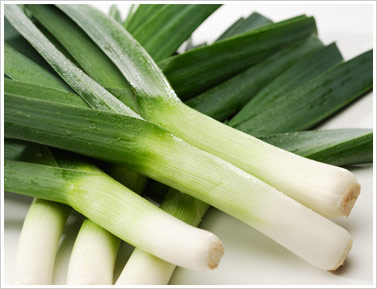
Not too many people know what these giants are, even less eat them.
Leeks look like a giant green onion and that would be because it belongs to the garlic and onion family (Allium vegetables).
Leeks are a good source of manganese and a good source of vitamin B6, vitamin C, folate, and iron. This particular combination of nutrients would make leeks particularly helpful in stabilizing blood sugar, since they not only slow the absorption of sugars from the intestinal tract, but help ensure that they are properly metabolized in the body.
Regular consumption of Allium vegetables, as little as two or more times a week, is associated with a reduced risk of prostate and colon cancer. The research focused on colon cancer suggests that several of the compounds found in these foods are able to protect colon cells from cancer-causing toxins, while also stopping the growth and spread of any cancer cells that do happen to develop. Ovarian cancer is also shown to be reduced.
A high intake of Allium vegetables has been shown to reduce total cholesterol and LDL, or "bad" cholesterol levels, while at the same time raising HDL, or "good" cholesterol levels. Allium vegetables have also been shown to lower high blood pressure, another risk factor for heart attack and stroke.
So how do you eat Leeks?? You want to trim about 1/4" from the root bottom and a good portion of the dark green top. I like to remove the outer layer. Dirt will get stuck in between the many layers of this vegetable so you want to wash it thoroughly. You can toss sliced leek into an omelet or frittata, or use them to garnish.
Thanks to a wonderful vegetarian cookbook author, Mollie Katzen: The Vegetable Dishes I Can't Live Without, I am incorporating leeks and other more interesting, less noticed vegetables in my diet. Here is her recipe for "Leek Chips".
After trimming off the roots and dark greens so that you are only using the white and light green portions, slice the leek into 1/4" pieces. Put them in a bowl of cold water to rinse the dirt off and seperate all the layers into several rings. When they are all seperated, transfer to a colander to drain. Pat dry.
Line a try with tin foil and drizzle 1-2 tablespoons olive oil. Dump the leeks onto tray and using tongs, toss the leeks with the olive oil. Bake in a 250 degree oven. Times of baking will vary. Some of the leeks will be done in thirty minutes and some may take an hour. When they are golden and crisp tender, remove them as they are done. Season with salt and wallah!!
Heavy Weight Training vs. Light Weight Training
I am a big believer in weight training. It's important for muscle and bone. I found an article that hits on points that I would like to say but have less expertise to say them. I know that women are encourage to do light weight with more reps, that that is how they will burn the fat and become trim. I say nay. Although it is beneficial for your short-twitch fibers, there is more benefit from heavy weight training in conjunction with a proper diet.
"For years, one debate that has been tossed back and forth in just about every gym and fitness center across the country is; which is better, heavy resistance training or light resistance training? A variety of factors play into this debate, and the answers may not be as obvious as it may seem.
For years (and still today) many weight training enthusiasts thought that the key to getting stronger and building bigger muscles was simply to perform heavy resistance training by lifting big weights. Conversely, it was also thought that if an individual wanted to increase muscle tone or improve weight loss, heavy weights were the enemy and one must aim for higher reps with lighter weight. Years of experience have shown us that this is not always the case.
Muscles grow when they are forced to compensate for extra work. Think about when you first began lifting weights. Within a few months, the muscle growth you experienced was phenomenal, but after a while it dramatically slowed down. This initial explosion of muscle growth was due the fact that your body was not accustomed to lifting weights. Therefore, your muscles rapidly began to grow in size to keep up with their newly acquired task of weight training.
Let’s say you always follow a heavy resistance training program when you go to the gym. You will undoubtedly hit a plateau when you can no longer push any heavier weight. Your muscle growth has stalled. You decide to incorporate a higher rep range instead of your normal one, and suddenly your muscle growth once again takes off. This different training style has caused your muscles to adjust for their newfound workload.
On the flip side, if you constantly train with lighter weight and higher reps, then you switch to lower reps with heavy weight, the same spurt of new muscle growth may happen.
Muscle fibers are categorized into two classes: fast twitch and slow twitch. When you consistently train with heavy weights at lower reps, you focus more on your fast twitch fibers. Fast twitch fibers are excellent at generating short bursts of strength or speed. Slow twitch fibers are more efficient at generating continuous muscle contractions over longer periods of time, perfect for light resistance training with a high rep range. When you switch up your training, you can hit both of these muscle fiber types instead of focusing on one.
Of course, we cannot forget about the all-important role that nutrition plays in muscle growth. You can spend all day in the gym, training with both heavy and light weight and still never gain another ounce of muscle if your don’t consume enough calories to fuel growth.
Let’s go back to our scenario of our first few months in the gym. Back then, it didn’t really matter what you were eating, it seemed that everything was helping you to gain more muscle. This approach no longer works after a few months, and to keep adding muscle, you must consume adequate protein and calories.
Now, as far as the idea that light resistance training with high reps will help tighten up and tone muscles, think about this; when a bodybuilder begins their contest preparation, they don’t all of the sudden switch to lighter weight to help strip body fat. The entire outcome of their contest prep depends on their nutrition plan. They could do sets of 100 reps, but if all they consumed were cheeseburgers, their physique will not come in looking its best. Since this is true of a bodybuilder preparing for a contest, wouldn’t the same rule apply to the average person who wants to look better? Absolutely.
The human body is remarkably adaptable. In order to keep muscles growing, you must challenge them in different ways, and be sure to consume a proper diet. Try not to fall into the trap of doing the same workout day in and day out. As the saying goes, “If you always do what you’ve always done, you’ll always get what you’ve always got.” "
Author's Bio
Tim Mielke
Author and Supplement Expert
"For years, one debate that has been tossed back and forth in just about every gym and fitness center across the country is; which is better, heavy resistance training or light resistance training? A variety of factors play into this debate, and the answers may not be as obvious as it may seem.
For years (and still today) many weight training enthusiasts thought that the key to getting stronger and building bigger muscles was simply to perform heavy resistance training by lifting big weights. Conversely, it was also thought that if an individual wanted to increase muscle tone or improve weight loss, heavy weights were the enemy and one must aim for higher reps with lighter weight. Years of experience have shown us that this is not always the case.
Muscles grow when they are forced to compensate for extra work. Think about when you first began lifting weights. Within a few months, the muscle growth you experienced was phenomenal, but after a while it dramatically slowed down. This initial explosion of muscle growth was due the fact that your body was not accustomed to lifting weights. Therefore, your muscles rapidly began to grow in size to keep up with their newly acquired task of weight training.
Let’s say you always follow a heavy resistance training program when you go to the gym. You will undoubtedly hit a plateau when you can no longer push any heavier weight. Your muscle growth has stalled. You decide to incorporate a higher rep range instead of your normal one, and suddenly your muscle growth once again takes off. This different training style has caused your muscles to adjust for their newfound workload.
On the flip side, if you constantly train with lighter weight and higher reps, then you switch to lower reps with heavy weight, the same spurt of new muscle growth may happen.
Muscle fibers are categorized into two classes: fast twitch and slow twitch. When you consistently train with heavy weights at lower reps, you focus more on your fast twitch fibers. Fast twitch fibers are excellent at generating short bursts of strength or speed. Slow twitch fibers are more efficient at generating continuous muscle contractions over longer periods of time, perfect for light resistance training with a high rep range. When you switch up your training, you can hit both of these muscle fiber types instead of focusing on one.
Of course, we cannot forget about the all-important role that nutrition plays in muscle growth. You can spend all day in the gym, training with both heavy and light weight and still never gain another ounce of muscle if your don’t consume enough calories to fuel growth.
Let’s go back to our scenario of our first few months in the gym. Back then, it didn’t really matter what you were eating, it seemed that everything was helping you to gain more muscle. This approach no longer works after a few months, and to keep adding muscle, you must consume adequate protein and calories.
Now, as far as the idea that light resistance training with high reps will help tighten up and tone muscles, think about this; when a bodybuilder begins their contest preparation, they don’t all of the sudden switch to lighter weight to help strip body fat. The entire outcome of their contest prep depends on their nutrition plan. They could do sets of 100 reps, but if all they consumed were cheeseburgers, their physique will not come in looking its best. Since this is true of a bodybuilder preparing for a contest, wouldn’t the same rule apply to the average person who wants to look better? Absolutely.
The human body is remarkably adaptable. In order to keep muscles growing, you must challenge them in different ways, and be sure to consume a proper diet. Try not to fall into the trap of doing the same workout day in and day out. As the saying goes, “If you always do what you’ve always done, you’ll always get what you’ve always got.” "
Author's Bio
Tim Mielke
Author and Supplement Expert
Monday, February 1, 2010
Flaxseeds

These little guys are abundant in Omega-3 fatty acids. They help prevent and control high blood pressure, are rich in beneficial fiber, and recent studies have shown to lower risk of prostate and breast cancers.
Flaxseeds can be purchased either whole or ground. Try a serving in a protein shake, oatmeal cereal or on a salad. It's health benefits are great!
Flaxseeds can be purchased either whole or ground. Try a serving in a protein shake, oatmeal cereal or on a salad. It's health benefits are great!

More information can be found at whfoods.com
Subscribe to:
Posts (Atom)
